Your Weight Loss Planner Set for Real Progress
Most people start a health journey with enthusiasm and scattered sticky notes. A few weeks later, motivation dips, tracking becomes inconsistent, and the whole thing quietly fades away. That is not a willpower problem. It is often a structure problem. A Weight Loss Planner Set changes the game by giving you a single, organized place to record meals, movement, measurements, and the small daily wins that actually drive long-term change.
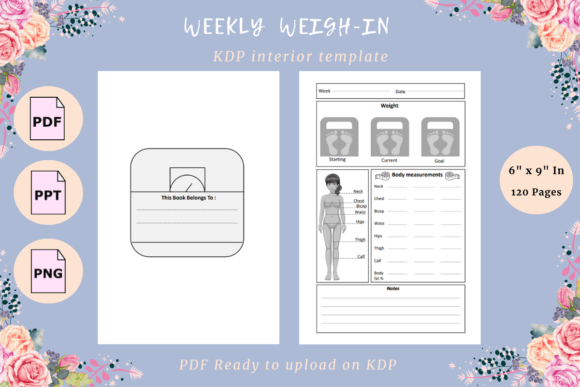
For anyone creating content, building a brand around wellness, designing printable products, or simply wanting a better personal system, this ready-to-use KDP interior template removes the heavy lifting of designing from scratch. You get a polished 120-page layout in a compact 6" x 9" trim size, with no bleed to worry about during printing. The file arrives as a print-ready PDF, but you also receive the full PowerPoint source files. That means you can tweak colors, fonts, cover elements, or interior prompts to fit your exact audience.
What Actually Comes Inside the Weight Loss Planner Set
This is not a generic notebook with blank lines. The interior is purpose-built around weekly tracking and reflection. The core element is the Weekly Weigh In Log Book structure, which gives users a consistent format to record weight, note trends, and stay accountable without obsessive daily scale hopping. Beyond that, you will find meal planners, hydration trackers, exercise logs, goal-setting pages, and space for personal reflections.
The file package includes:
- High-quality print-ready PDF formatted for KDP upload with proper margins and spine considerations.
- PNG files for quick previews, mockups, or marketing assets.
- PPTX source files that let you fully customize the interior before exporting to PDF.
- 120 pages balanced between guided prompts and flexible note space.
- No-bleed design that keeps the layout clean and printing costs predictable.
The 6" x 9" format hits a sweet spot. It is large enough to write comfortably but small enough to toss into a bag or keep on a nightstand. For KDP publishers, this trim size also performs well in the health and wellness category, where buyers expect portable, journal-style books they can use daily.
Why a Dedicated Weight Loss Journal Matters
Scattered tracking creates scattered results. When someone writes down what they eat, how they slept, and what movement they did, patterns emerge that remain invisible otherwise. They might notice that poor sleep consistently leads to skipped workouts. Or that certain meals leave them energized while others trigger cravings by mid-afternoon. A weight loss journal for women specifically often includes prompts around hormonal cycles, stress management, and body image reflections that generic planners miss entirely.
From a behavioral psychology standpoint, the act of writing something down increases commitment. It transforms a vague intention into a concrete record. Users who log consistently tend to make better in-the-moment decisions because they know they will have to face that page later. The planner becomes a quiet accountability partner that never judges, never lectures, and simply holds space for honest tracking.
Structure That Supports Consistency Without Overwhelm
The weekly weigh-in format deserves special attention. Daily scale fluctuations can be demoralizing and misleading due to water retention, sodium intake, or hormonal shifts. A once-weekly check-in smooths out that noise and shows genuine trends. This planner builds each week around that single weigh-in moment, surrounding it with supportive prompts that contextualize the number rather than letting it define success or failure.
Each weekly spread typically includes room to note energy levels, non-scale victories, challenges encountered, and adjustments to try in the coming week. The balance between data tracking and reflective writing prevents the experience from feeling like a chore. Users are not just collecting numbers. They are building self-awareness.
Who Uses This Template and How
The audience for this Weight Loss Planner Set spans far beyond individual dieters. It serves multiple practical purposes across personal, professional, and commercial environments.
KDP Publishers and Printable Shop Owners
For creators selling on Amazon KDP, Etsy, or Gumroad, ready-to-upload interiors save dozens of design hours. You download the PDF, optionally modify the PPTX files to match your brand aesthetics, add your cover design, and publish. The no-bleed format simplifies the technical side, especially for newer publishers who might find bleed settings confusing. Wellness planners consistently rank among the top-selling low-content book categories, and having a professionally designed interior gives you a competitive edge over rushed, poorly formatted alternatives.
Health Coaches and Nutrition Professionals
Coaches can customize this planner as a client resource. Brand it with your logo, add your specific methodology prompts, and provide it as a downloadable bonus or physical companion to your coaching packages. Clients get a tangible tool that reinforces your guidance between sessions. You get a branded touchpoint that keeps your name and approach front of mind.
Personal Users Committed to Their Goals
An individual who simply wants a well-designed tracker without building one from scratch can print this at home, upload it to a tablet for digital annotation, or order a printed copy through KDP once a publisher lists it. The clean layout reduces the mental friction of starting. There is no intimidation factor, just clear, welcoming pages ready to be filled.
Bloggers and Content Creators
Wellness bloggers can use this planner as a lead magnet, affiliate product, or content inspiration. Reviewing how you use the Weekly Weigh In Log Book sections in your own journey creates authentic content that resonates with readers. The PPTX source files let you screenshot or adapt pages for social media posts without worrying about copyright issues.
Customization Flexibility That Saves Real Time
One standout feature is the inclusion of PowerPoint source files. Many KDP templates only offer a locked PDF, which limits your ability to adjust anything. With the PPTX, you can change fonts, add or remove sections, insert your own branding, adjust colors, and even restructure the weekly layouts. If your audience prefers metric measurements over imperial, you make that switch in minutes. If you want to add a specific gratitude prompt or habit tracker, you drop it right in.
This flexibility matters for building a distinct brand. Two publishers can start with the same base template and end up with completely different final products by adjusting the visual tone and tailored prompts. One might create a minimalist, neutral-toned version. Another might go bold with vibrant accent colors and motivational quotes sprinkled throughout.
Practical Observations From Using Similar Planners
Over years of working with health tracking tools, certain truths hold steady. The best planners are the ones people actually use. Fancy layouts with tiny grids and overwhelming data fields tend to get abandoned. This template strikes a functional balance. The 6" x 9" pages provide enough room for meaningful writing without demanding marathon journaling sessions.
Users often find that the weekly weigh-in format reduces scale anxiety. Instead of dreading a daily confrontation with a number, each weigh-in becomes part of a larger weekly review. They also see hydration and sleep data in context with weight trends, which builds a more compassionate and accurate understanding of their body's patterns.
From a pure business perspective, wellness journals with a clear weekly tracking structure tend to attract repeat buyers. Someone who completes a 12-week or 120-page planner often returns for another copy or recommends it to friends. The no-bleed interior keeps production consistent across print-on-demand orders, reducing customer complaints about trimmed edges or misaligned content.
Things to Consider Before Purchasing or Publishing
While the template provides a strong foundation, you should evaluate a few factors. First, consider your audience's specific preferences. The current layout might lean more toward a female audience given the common phrasing of weight loss journal for women, but the core tracking pages work universally. If you want to market to a broader demographic, you may want to adjust some language or imagery in the PPTX source files.
Second, think about how you will differentiate your version. The low-content book market rewards unique positioning. Maybe you pair this interior with a cover that speaks to busy professionals over 40. Maybe you target new mothers or people recovering from injury. Small tweaks to the interior prompts can align the entire book with a niche that faces less competition.
Third, test your print copies. KDP print quality can vary slightly by region and printer. Order a proof copy and flip through every page. Check that margins feel comfortable, text is sharp, and the overall experience matches your expectations. The no-bleed format makes this testing process smoother since you do not have to worry about trim variance cutting into your content.
Turning a Template Into a Valuable Asset
A Weight Loss Planner Set sitting on your hard drive has potential. How you implement it determines whether that potential becomes profit, progress, or both. Publishers might combine this interior with a strong cover design, targeted keywords, and a clear category strategy to build a steady passive income stream. Coaches might use it to deepen client relationships and improve retention. Individuals might print a copy today and start building the awareness that leads to sustainable change.
The beauty of a well-structured planner is that it meets people exactly where they are. Whether someone has 50 pounds to lose or simply wants to feel more in tune with their body's rhythms, the same framework supports them. The weekly weigh-in log provides objective data. The reflection prompts provide subjective insight. Together, they create a feedback loop that strengthens with each completed week.
For anyone who has ever stared at a blank notebook wondering where to start, this template answers that question with gentle structure. The pages guide without dictating. They prompt without pressuring. And because you can adapt every element to your voice and vision, the final product feels genuinely yours, not like a cookie-cutter template you merely slapped your name onto.
Whether you download it for personal accountability or publish it as your next KDP product, the value lies in the consistent use of a system designed to reveal patterns, celebrate progress, and keep the focus on what actually works over time. That is what separates effective health tools from forgotten notebooks on a shelf.