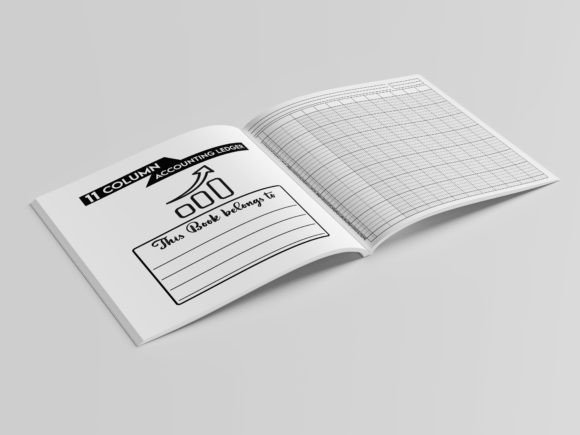
Understanding the Purpose and Practicality of an 11 Column Accounting Ledger Book
In the world of bookkeeping, the ledger is the foundational document where financial transactions find their permanent record. While digital accounting software dominates modern business conversations, physical ledger books retain a crucial role for many individuals, small businesses, and hobbyists. Among these, the 11 Column Accounting Ledger Book represents a specific and detailed format designed for particular accounting needs.
The Structure and Distinction of an 11 Column Ledger
An 11 Column Accounting Ledger Book is, at its core, a pre-formatted paper-based tool for recording financial entries. Its defining feature is the eleven columns on each page, which typically break down a transaction into its essential components. Common column headers include Date, Description, Reference (like check number), Debit, Credit, and then a series of columns for specific account categories or balancing figures. This level of granularity is what sets it apart.
Unlike a simple three-column (Date, Description, Amount) cash book or a general journal, the 11 column format is structured to facilitate a more detailed analysis. It often allows for the simultaneous tracking of multiple accounts or the immediate calculation of running balances. This design is a hybrid, blending aspects of a general ledger with the immediacy of a specialized journal. For someone manually managing their books, this structure can reduce the need to transfer information between multiple books, consolidating data into a single, comprehensive view.
Comparing Ledger Formats and Their Best-Fit Situations
When evaluating ledger options, the number of columns is a primary decision factor, directly correlating to the complexity of the financial tracking required.
- Simple 3–5 Column Ledgers: These are ideal for basic personal budgeting, tracking a single bank account, or recording cash transactions for a very small venture. They are minimalist and easy to use but lack the detail needed for proper double-entry bookkeeping or multi-account management.
- Standard 8 Column Ledgers: A common choice for many small businesses, these often accommodate double-entry recording with separate debit and credit columns for a handful of key accounts. They offer a good balance between detail and simplicity.
- The 11 Column Accounting Ledger Book: This format enters the territory of more detailed financial management. It is particularly well-suited for individuals or micro-businesses that operate with several distinct income streams, expense categories, or need to track petty cash alongside main accounts. It provides the space to separate transactions into categories like Supplies, Travel, Revenue A, Revenue B, etc., on the same line, offering instant categorical breakdowns.
The tradeoff here is one of complexity versus utility. A simpler ledger is faster to fill out but may require later aggregation of data from disparate sources. The 11 Column Accounting Ledger Book demands more attention during the entry process, as each transaction must be dissected across the columns, but it pays dividends in organized reporting and analysis. It is not typically the best first ledger for a complete novice, but for someone with basic accounting knowledge or a growing operation, it can be a powerful tool.
Practical Applications and Realistic Examples
Consider a freelance graphic designer. They might have income from client projects, teaching workshops, and selling digital templates. Their expenses could include software subscriptions, marketing costs, home office utilities, and material purchases. A simple ledger would lump all income and expenses together. An 11 Column Accounting Ledger Book, however, could have columns for each income source and key expense category. Entering a single client payment would involve noting the amount in the "Client Revenue" column and the "Bank" balance column, instantly showing how that payment affects both the specific revenue stream and the overall cash position.
Another realistic use case is for a small nonprofit club, like a community sports team. They need to track membership fees, sponsorship income, equipment costs, venue rentals, and travel expenses. The 11-column format allows the treasurer to record, for example, a purchase of new equipment, immediately allocating the cost to the "Equipment" expense column and updating the "Cash Balance" column, while the description field notes the supplier. This creates a transparent, categorical record that simplifies year-end reporting to members.
When an 11 Column Ledger is the Right Choice and When to Seek Alternatives
The decision to use an 11 Column Accounting Ledger Book hinges on your need for detail at the point of entry. It is a strong choice if you: operate a small business with multiple, distinct financial activities; are a sole proprietor wanting clear category tracking for tax preparation; manage a hobby or project with dedicated funding sources; or simply prefer a paper-based system that offers more analytical structure than a basic notebook.
Its limitations are equally important to consider. Manual entry is time-consuming, and the physical book is not scalable for high-volume transactions. It lacks the automation, error-checking, and reporting power of digital software like QuickBooks or even a well-structured spreadsheet. Therefore, if you process dozens of transactions weekly, require instant profit & loss statements, or need to share data remotely with an accountant, a paper ledger—even a detailed 11 column one—will likely become a bottleneck.
In such cases, the ledger book might still play a complementary role. Many businesses use software for daily accounting but maintain a physical 11 Column Accounting Ledger Book for a specific purpose, such as tracking petty cash disbursements or recording cash sales at an event, where immediate, tangible records are preferred.
Evaluating Ready-to-Upload Work Files for Custom Creation
A modern advantage of physical ledger products is the availability of digital source files. The offer of PDF, PPTX, JPEG, and PNG source files for an 11 Column Accounting Ledger Book changes the evaluation from simply buying a product to acquiring a customizable template. This is significant for the discerning buyer comparing options.
These work files allow you to create your own unique book. You can adjust column headers to match your specific account names using the PowerPoint (PPTX) or image files. The high-quality print-ready PDF ensures the final product looks professional. This flexibility addresses a key weakness of pre-printed ledgers: their fixed categories may not align perfectly with your needs. With source files, you can tailor the 11 Column Accounting Ledger Book before printing, making it a bespoke tool.
However, this requires a level of digital design competence. Comparing this to purchasing a standard pre-printed ledger from a store, the tradeoff is between convenience and customization. The store-bought book is ready immediately. The work-file approach demands time and skill to assemble but yields a personalized result. For someone who finds standard 8-column ledgers lacking but a 13-column version overwhelming, modifying an 11-column template to add or remove two columns can create the perfect fit.
Key Decision Factors for Your Bookkeeping Tools
Choosing any bookkeeping resource involves weighing several factors beyond just the product features.
- Volume and Complexity of Transactions: Low volume and moderate categorical complexity favor a detailed paper ledger. High volume or simple categories suggest simpler tools.
- Your Comfort with Accounting Principles: The 11-column format assumes some understanding of separating transactions into components. If you're unfamiliar with debits/credits or account categorization, a simpler start might be wiser.
- Need for Physical versus Digital Records: Some situations legally or practically require a bound, sequential physical record. Others benefit from digital searchability and calculation.
- Budget and Time for Setup: A standard ledger book is inexpensive and instant. Customizing from source files has a low upfront cost but requires an investment of time.
- Future Growth Plans: If you anticipate significant growth, investing in a system that can scale—like software—might be more prudent, even if you start with a paper ledger for now.
Ultimately, an 11 Column Accounting Ledger Book, especially with customizable work files, occupies a specific niche. It is a detailed, tangible, and adaptable tool for those who value hands-on control over their financial records and have accounting needs that fall between the simplicity of a checkbook register and the full automation of digital software. By understanding its structure, comparing it to broader options, and honestly assessing your own requirements, you can make an informed decision on whether this specialized ledger format is the right resource for your financial tracking.