Business Planner Printable BUNDLE: A Comprehensive 21-Page System for Small Business Owners
Many small business owners, side hustlers, and solo entrepreneurs start out with good intentions and a notebook full of scattered notes. Over time, tracking orders, managing inventory, planning social media, and keeping tabs on profits becomes harder without a consistent structure. A Business Planner Printable BUNDLE addresses that need by pulling together 21 essential planning and tracking pages into a single, reusable format. This article examines what that type of bundle typically includes, how it compares to other organizational approaches, and when it makes sense to invest in a printed system rather than a digital one.
What Makes a 21-Page Business Planner Printable BUNDLE Distinct
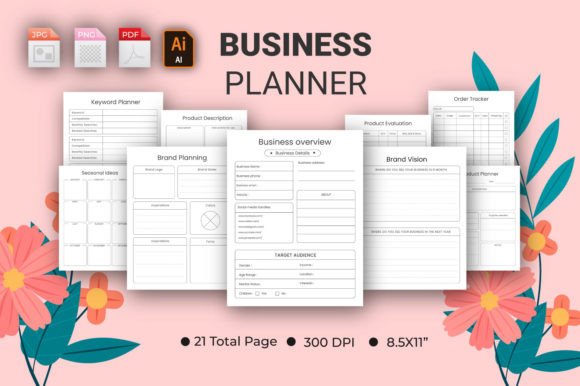
Rather than offering a generic planner, a well-designed business printable bundle targets the specific workflows of product-based and service-based micro-businesses. The bundle described here concentrates on physical product sellers, makers, and creative entrepreneurs. It spans operational planning, branding, financial monitoring, and logistics. Each page serves a focused purpose, from high-level brand vision to granular order tracking. Because the files arrive as print-ready JPG, PNG, and PDF formats in both A4 and 8.5"×11" sizes without bleed, you can print only the sheets you actually need, duplicate them as required, or use them in a binder, discbound planner, or even as digital markups on a tablet.
The 21 pages include practical tools like a product planner, inventory tracker, pricing strategy worksheet, and shipping logs, alongside forward-looking pages for seasonal ideas, brand planning, and keyword exploration. This blend of strategic and operational pages sets it apart from simpler to-do list planners or financial-only bundles. It acknowledges that small business owners wear many hats and need varied tools in one place.
Core Sections and How They Support Daily Operations
The bundle covers a wide spectrum of tasks that often live in disconnected apps or sticky notes. Here is how some of the key pages function within a typical small business rhythm:
- Business Overview and Brand Vision: These two pages help you define your business identity and long-term direction. Unlike a quick mission statement scribbled in a notebook, structured prompts guide you to articulate your unique value, target audience, and visual direction. This consistency strengthens branding across social media, packaging, and product descriptions.
- Product Planner and Product Evaluation: Before launching a new item, the product planner walks you through cost, materials, and anticipated pricing. After launching, the evaluation sheet lets you review actual performance against expectations. Together they encourage intentional product development rather than hoping for a hit.
- Inventory and Order Management: The bundle includes a product inventory page, a “running out of” reminder, an order tracker, and an order form. A seller can glance at one binder section and see which supplies need reordering, which customer orders are pending, and how many finished pieces remain in stock. This is especially helpful during busy markets or seasonal rushes.
- Financial Tracking and Profit Analysis: Instead of waiting for monthly bank summaries, you can use the profit tracker, annual profit overview, and pricing strategy page regularly. The coupons and discounts sheet lets you record promotions, while the return tracker logs refunds or exchanges. This brings ongoing financial awareness without needing accounting software.
- Sales and Marketing Support: A keyword planner, seasonal ideas list, and social media content spaces live alongside a sales tracker. This combination helps small business owners align marketing activities with actual sales data, something that can easily get lost in purely digital tools that separate content calendars from financials.
- Shipping and Supplier Management: A shipping tracker (included twice, presumably to cover both incoming supplies and outgoing orders) and a suppliers list prevent the chaotic scramble of searching through emails for tracking numbers or supplier contacts. The order form page can double as a packing slip or internal reference.
Comparing Printable Planners to Digital Tools and Spreadsheets
Every organizational system involves tradeoffs. A Business Planner Printable BUNDLE competes with several alternatives, each with its own strengths and limitations. Understanding these comparisons helps clarify whether a printable system fits your habits and business stage.
Printable Bundle vs. Digital Business Apps
Dedicated small business software solutions can automate calculations, send alerts, and sync across devices. However, many apps come with monthly fees, learning curves, and feature sets that may be overkill for a solo artisan or side hustler. A printable bundle costs once and can be used indefinitely. It requires no internet connection, no software updates, and no battery. The physical act of writing can also improve memory and commitment to goals. On the other hand, digital apps instantly aggregate data and generate charts. If you need real-time profit dashboards or team access, a printed binder will fall short. For strictly personal use and hands-on management, the printable bundle often feels more direct and customizable.
Printable Bundle vs. DIY Spreadsheets
Many entrepreneurs start with Excel or Google Sheets. Spreadsheets offer flexibility, automatic calculations, and cloud access. The downside is that they often become disorganized over time, with multiple tabs, inconsistent formatting, and no dedicated structure for things like brand vision or product evaluation. A pre-designed printable bundle provides a clear layout with guided fields. You avoid the time sink of building and tweaking templates from scratch. If you already have a highly refined spreadsheet system that you love, the bundle might add unnecessary duplication. But if your spreadsheets feel fragmented or you constantly start new ones, the complete bundle can impose welcome structure.
Printable Bundle vs. Generic Planners and Bullet Journals
Standard planners emphasize daily, weekly, and monthly calendars. Bullet journals allow complete creative freedom. While both can be adapted to business tracking, they lack the built-in prompts for product-specific planning, shipping logs, and profit tracking. A business planner printable bundle skips the general life planning and dedicates every page to commerce-focused tasks. This specialization saves time for product sellers who don’t want to draw their own inventory grids or pricing tables. However, if your business blends heavily with personal projects, a bullet journal with a few custom collections might feel more holistic. The bundle works best when you want a clear separation between business operations and personal planning.
Strengths of Using a 21-Page Business Planner Printable Bundle
Several practical advantages consistently appear when real users work with these kinds of printable systems:
- One-Time Purchase, Unlimited Prints: Once you download the files, you can print as many copies as you need for your business. If an order tracker fills up, you print a fresh one. If you launch a new product line, you print another product planner.
- Physical, Tactile Engagement: Writing by hand slows down thinking and can improve clarity. Physically crossing off tasks or flipping through pages provides a satisfaction that clicking software often lacks. This can sustain motivation during slower business periods.
- High Customization Without Coding: You choose which pages go into your binder and how many. You can rearrange, color-code, and add sticky notes. Unlike an app’s fixed interface, you fully control layout and order.
- No Privacy or Data Risks: All your sensitive financial and supplier information stays on paper. There’s no risk of a cloud service breach, account lockout, or accidental deletion — though paper has its own physical risks.
- Print-Ready and KDP Compatible: The files are sized at 8.5"×11" with no bleed and 300 dpi resolution, making them suitable for at-home printing or professional binding, and even for those who want to upload and sell similar products through Kindle Direct Publishing.
Potential Tradeoffs and When the Bundle Might Not Be the Best Fit
No single planning solution works for every business model or personality. Understanding the limitations of a Business Planner Printable BUNDLE prevents frustration and helps you choose wisely.
- Manual Calculations and No Automation: You must manually add expenses, track profit margins, and count inventory. If you manage high volumes of daily transactions, this can become tedious and error-prone compared to e-commerce platform integrations that pull data automatically.
- Physical Storage and Portability: A binder full of printed pages takes up desk or shelf space. Unlike a smartphone app, it doesn’t slide into your pocket. If you travel frequently or work from multiple locations, carrying a planner might be inconvenient, though you could store the PDFs on a tablet for on-the-go markup.
- Limited Collaboration: If you have a business partner or a small team, sharing one paper binder is impractical. Digital tools allow multiple people to update inventory, orders, and finances simultaneously. The printable bundle suits a solopreneur who makes all the decisions alone or with occasional help.
- Potential for Paper Clutter: Without a disciplined filing system, loose printed sheets can pile up. Some users love the flexibility; others find it harder to maintain than a structured app that reminds them what to do next.
- Niche Focus on Product Sellers: The bundle’s pages strongly favor physical product businesses, makers, and creators who manage inventory, shipping, and suppliers. If you run a pure service business, consulting practice, or freelancing model without physical goods, many pages (like product inventory, order tracker, shipping) become irrelevant. You would be better served by a service-oriented planner or a simple finance spreadsheet.
Who Benefits Most from a Business Planner Printable BUNDLE?
Based on its design, this type of bundle aligns well with several specific types of users and business stages:
- Side Hustlers Transitioning to Systematic Operations: If you sell handmade goods, printables, or curated items through platforms like Etsy, eBay, or Shopify while managing everything yourself, the bundle provides the missing structure. It helps move from “selling as a hobby” to running a mini-business with documented processes.
- Creative Entrepreneurs Who Prefer Paper: Many artists, crafters, and designers find digital tools disconnecting. A paper planner that integrates branding, product design, social media ideas, and finances feels more aligned with their workflow and creative mindset.
- Brick-and-Mortar Micro-Shops or Pop-Up Sellers: For small retail spaces, a binder with inventory, sales tracker, and supplier lists becomes a reliable point-of-sale reference when technology fails or feels cumbersome during a busy market day.
- Print-on-Demand and Product Sellers on Multiple Platforms: Juggling Amazon, Etsy, and direct website orders can scatter order and shipping information. A centralized paper log offers a quick snapshot without logging into multiple dashboards, though you still need to manually enter data.
- Beginners Who Want a Complete Framework Without Overthinking: Instead of guessing which spreadsheets or apps to use, a 21-page bundle hands you a full system. The built-in categories reduce decision fatigue and let you focus on actually doing the work.
Realistic Scenarios: How the Bundle Fits Into Daily Business Life
Consider a small business owner who sells handmade candles. In a single week, she might use the product inventory page to note wax and wick levels, the order tracker for three online sales, the shipping tracker to log carrier details, and the profit tracker after buying supplies. Meanwhile, the seasonal ideas page holds notes for a fall-scented collection, and the keyword planner helps her craft Etsy listing titles. All this data lives in one tabbed binder on her desk. She can quickly see which fragrances are selling and which need discounting using the coupons and return trackers. The brand vision page reminds her to keep packaging consistent as she adds new products.
Alternatively, imagine a hobby woodworker who builds custom furniture on commission. He may not need the “running out of” or product inventory pages if he buys materials per project. However, the order form, pricing strategy, and supplier lists become his most-used sheets. He can skip printing the irrelevant pages entirely. This demonstrates the bundle’s flexibility — you adapt it rather than being forced into a rigid journal structure.
Making an Informed Decision: Practical Factors to Weigh
Before purchasing or downloading a Business Planner Printable BUNDLE, consider several decision factors that go beyond feature lists:
- Your Workflow Style: Do you enjoy sitting down with pen and paper to review your week, or do you reach for your phone first? Be honest about which habit you will sustain. A beautiful binder left unused provides no value.
- Business Complexity: Identify which pages you will actually use. If you need more than half of the 21 pages, the bundle offers value as a complete system. If only three or four pages apply, a simpler, free printable set or dedicated digital tool might be more efficient.
- Data Analysis Needs: If you thrive on visual charts, trend lines, and year-over-year comparisons generated automatically, a paper tracker limits you to what you manually calculate and graph. Some owners pair the printable bundle with a simple spreadsheet for high-level analytics, getting the best of both worlds.
- Growth Plans: A one-person operation can comfortably run on paper. If you plan to hire even one employee or virtual assistant in the next year, you will likely need shared digital tools. The printable system could still serve as your personal command center, but ensure it doesn’t create duplicate work when delegating.
- Cost vs. Convenience: The one-time cost of a printable bundle is low compared to monthly software subscriptions. However, factor in the cost of paper, ink, a quality binder, and the time spent printing and organizing. For some, the time investment outweighs the monetary savings.
Exploring Alternative Approaches Without Naming Names
Beyond the direct comparisons already discussed, some readers might look at this Business Planner Printable BUNDLE and wonder if they should instead build a custom system using a combination of a simple notebook, a Google Sheet, and a free mobile app for expense tracking. That hybrid approach can work well if you enjoy cobbling together tools and don’t mind switching contexts. The printable bundle’s advantage is coherence: everything lives in one physical place with consistent categories. However, a tinkerer who likes to design their own layouts might extract ideas from the bundle’s page structure and recreate them in a discbound system with their own flair, possibly using the provided PDF as a starting reference.
Another alternative is using a business journal with blank or lined pages and developing your own spreads. This offers infinite flexibility but requires significant time and design effort. The printable bundle shortcuts that process and provides professionally structured pages, which can be especially helpful when you’re too busy with actual business tasks to invent a planner from scratch.
When a Printable Bundle Becomes the Right Anchor for Your Business
After weighing the possibilities, many small business owners find that a Business Planner Printable BUNDLE serves as an anchor — a central, reliable reference that doesn’t change when phones update, apps rebrand, or subscription prices rise. It works best when you treat it as a living system rather than a static set of papers. Regularly reviewing and updating the pages, archiving completed sheets, and reprinting active ones keeps the bundle relevant month after month. It also pairs well with the rhythm of quarterly planning retreats or end-of-month financial reviews, where stepping away from screens can bring fresh perspective.
If you value hands-on control, clear separation between personal and business planning, and a visual snapshot of your entire operation without clicking through menus, this type of bundle likely aligns with your needs. If automation, scalability, and multi-user access are non-negotiable, you may need to supplement the printable system with digital tools or choose a different primary platform altogether. The bundle isn’t an all-or-nothing proposition; many users successfully blend printed planners for deep thinking and tracking with lightweight digital tools for invoicing or online banking. Understanding your own mix of needs will guide you toward the most effective combination.
The 21-page printable bundle brings together brand development, product planning, inventory and order management, financial tracking, and marketing support in a format that respects the way many creative entrepreneurs actually work. Its comprehensive nature is both a strength and a consideration — it covers a lot of ground, but you should realistically assess which pages earn their place in your binder. By evaluating the tradeoffs honestly and comparing your daily workflow against the alternatives, you can decide whether this all-in-one paper system becomes the organizational backbone your small business deserves.